Search Articles Related To Your Topic

Thursday, 7 May 2015

Fallacy of "My life my rules" system of thought in relevance to the contemporary Bodo society

Note:
  1. I have assumed that people following "My life my rules" principles have an Individualistic bent of mind contradictory to collectivism.
  2.  Though many groups work for the social welfare of the Bodos, only ABSU is mentioned.

Dissection and attributes of this style of thinking

  Technically speaking, this ideology advocates full independence of personal thought process and freedom to choose and set the path and direction  that an individual perceive to be the best and most natural way of accomplishing his/her economic, educational, social or spiritual/religious pursuits and aspirations. The DNA of this line of thinking can be traced back to western philosophy. In the Indian context, the ethical and moral justification of such ideology is fair and good as far as it remains a constructive social phenomena where questions of social/moral degradation seldom come to the picture,  but as this philosophy boils down to individuals its inherent flaws become conspicuous. Because, individual may not possess the complexity in his/her thinking process to deal with social/moral issues pragmatically. To incompetent and simplistic individuals, it would only mean access to short-term euphoria and freedom from responsibility. It will basically contradict the very purpose for which individual freedom is granted. In a nutshell this philosophy upholds only in society where education and skill has already reached its zenith. Hence, taking into account the Indian educational and social development scenario, "Our life, Our rule" can serve the purpose much better.

Friday, 1 May 2015

Remembrance of the Great Visionary Leader Bodofa Upendra Nath Brahma (Bodofa Day)

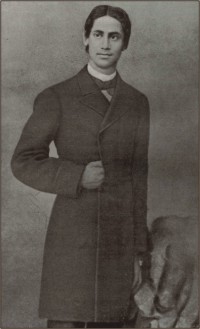
Today as we observe the 25th death anniversary of Bodofa (Father of Bodos) Upendra Nath Brahma (उपेन्द्रनाथ ब्रह्मा) the most powerful tribal leader of the twentieth century , a former president of the union who led the Bodoland movement across the state, we remember the sacrifices done by him. A student leader who had brought about remarkable changes in the lives of the downtrodden through the Bodoland movement. He was a leader not only for the Bodos but also for the underprivileged. He dream of a literate society. A great soul among the greatest visionary leaders of the Bodoland movement and an icon of leadership, sacrifice and unity.

Sunday, 26 April 2015

BJP Promises Indian Citizenship For Bangladeshi Hindu Refugees

Hindu refugees from Bangladesh will be given Indian citizenship if BJP comes to power in Assam in next year's Assembly poll, party president Amit Shah said. Some Hindus have come from Bangladesh due to religious disturbances.

BJP will give all of them citizenship once we come to power in Assam next year," Shah said at a rally here. Not only in Assam, but the party will work towards giving Indian citizenship to all Bangladeshi Hindu immigrants across the country, he added.

"Next elections will be fought on this issue. Assam poll will be for freeing the state of illegal Bangladeshi immigrants. Assam polls will also

Wednesday, 22 April 2015

Reasons Why I Want Bodoland


Let’s review the history of Bodo-Kacharis, History reveals that we Bodos(Bodo is derived from 'Bod' which means 'Tibet'), known as Kiratas, Asuras, Danavas and Mlecchhas in the ancient period of time, were the earliest inhabitants of the Northeastern region of India. Our ancestors migrated to the north-eastern part of India at about 5000 BC in search of greener pasture and better living from central Asia such as China, Mongolia, Tibet and Siberia. Writing about Bodos Endle remarked "in feature and general appearance they approximate very closely to Mongolian type; and this would seem to point to Tibet and China as the original home of the race". With the passage of time and situation, our ancestors scattered in different parts of the region and acquired different tribe names.  In the Brahmaputra Valley we are known as Boros, in Tripura as Tripuris, in north Cachar as Dimasas and so on.

Bodo-Kacharis were first classified by S. Endle as the Kacharis. Here, Bodo is derived from

Tuesday, 21 April 2015

The British stooge Tagore and the National Anthem - By Justice Markandey Katju

There is a controversy as to whether the Indian national anthem "Jana Gana Mana" was written by Rabindra Nath Tagore in praise of God, or as sycophancy in praise of the British King George the fifth.

In my opinion the evidence is strongly in favour of the second view.
To explain, let me first quote the Engish translation of the song:
  • "Victory to thee,
  • O ruler of the minds of the people,
  • O Dispenser of India's destiny.
  • Thy name rouses the hearts of Punjab, Sindh,Gujarat and Maratha,Of the Dravida, Odisha and Bengal;
  • It echoes in the hills of the Vindhyas and Himalayas,
  • mingles in the music of Yamuna and Ganges and ischanted by the waves of the Indian Sea.
  • We get up with your blessed name on our lips,
  • We pray for your auspicious blessings,
  • Thou dispenser of India's destiny.
  • Victory, victory, victory to thee."
Now a few things must be noted about this song:

1.The song was composed at precisely the time of the visit of the British King George the fifth and Queen Mary in December, 1911.

2.The poem does not indicate any love for the motherland.

3. The "Adhinayak" (Lord or Ruler) is being hailed. Who was the ruler of India in 1911? It was the British, headed by their King-Emperor.

4. Who was the "Bharat Bhagya Vidhata" (dispenser of India's destiny) at that time ? It was none but the British, since they were ruling India in 1911.

5.The song was sung for the first time in India on the second day of the Calcutta Conference of the Congress party in December 1911. This conference was held specially to give a loyal welcome to King George the fifth, and to thank him for annulling the Partition of Bengal in 1905.

6. The agenda of the second day of the Calcutta Conference, in which the song was sung, was specially reserved for giving a loyal welcome to George the fifth, and a resolution was adopted unanimously that day welcoming and expressing loyalty to the emperor and empress.

7. It was only as late as in 1937, when he wanted to show himself as a patriot, that Tagore denied that he had written the song to honour the British king. 

The above facts almost conclusively prove that "Jana Gana Mana" was composed and sung as an act of sycophancy to the British king.

And we have proudly adopted this song as our national anthem?
Jai ho!

 Source- Justice Markandey Katju's blog